Some thoughts on direct action, and my friend Lorem, on his 30th birthday
My friend Lorem died this week. A few days later, I was supposed to speak to a group of community organizers as part of a panel about Long Covid and direct action, and how we can center access for those most impacted. This is a lightly edited version of the presentation I gave, after scrapping my originally planned remarks.
Notes and trigger warnings: It may go without saying, but this piece talks about medical violence and disabled grief, in some detail. If that's not something you have the space to process right now, especially if you're living it directly already, please take care of yourself first and foremost.
I also want to make it clear that, while I focus mostly here on Long Covid and ME/CFS, these were not the direct cause of Lorem's death, nor were they the only disability identities that he claimed. Eugenicists love to cite comorbidities as justification that our deaths were no big deal anyway, but I mention it here because I think it's important to remember that medical violence goes beyond just Long Covid. The community that has come together to observe shiva for Lorem extends across diagnostic boundaries and stretches around the globe.
Some thoughts on direct action, and my friend Lorem
Hello! My name is Miranda DeNovo, I’m in New York City on Lenape land, I use she/her pronouns, and I’m a white woman in my 30s with cat-eye glasses that are sort of a soft tortoiseshell. I have my hair in a loose braid and am wearing a dark yellow floral dress, with purple 3D-printed earrings that say “fuck ICE.” I am also joined by a very friendly brown-and-white cat [not mine, just for the internet record] who will probably try to make some vocal contributions.
I came into Long Covid advocacy originally through the formative early days of the mask bloc movement, but in recent years I would generally describe myself as something along the lines of “former public health worker and current professional sick person”—which is a tongue-in-cheek way of saying that I don’t have a job, but also that the work of survival is constant, as I’m sure many of you know all too well.
I have also fallen into the roles of caregiver and advocate for people with the very severe forms of Long Covid and ME/CFS, which has led me to a specific fight for housing justice that can sometimes feel extremely lonely. So that’s what Long Covid Safety Net is about, although I’m not going to talk about that directly today.
I was invited to be a part of this panel because of an article I wrote for The Sick Times about Long Covid and ICE: how ICE is weaponizing communicable disease including covid but also tuberculosis, measles, etc., as well as the general weaponization of medical neglect; why neighborhood defense networks should be masking, and not just to avoid surveillance; and how people with Long Covid can play a crucial role not only in the streets, but also from their homes and even their beds.
I was originally planning to focus more on this topic, but I also have something else that I need to talk about right now. I promise it will all come back around to direct action, but it’s going to take me a minute to get there.
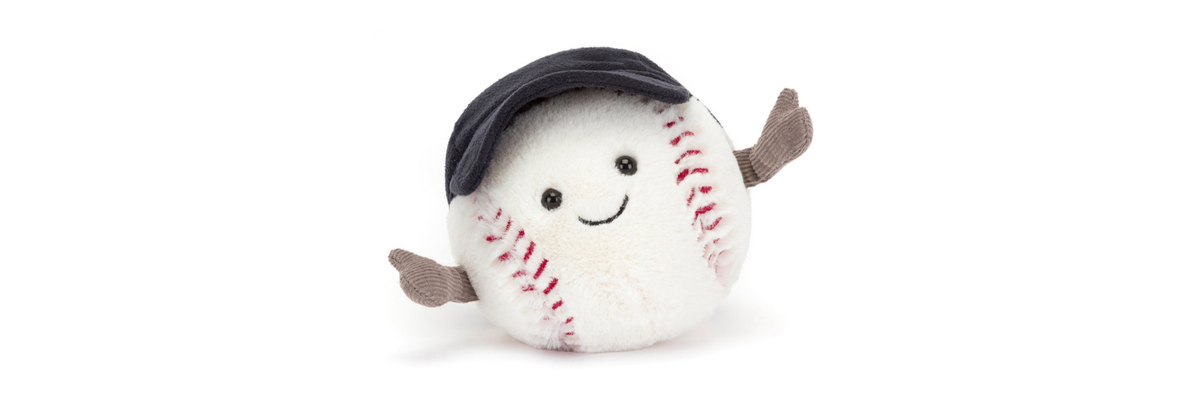
Over the weekend, I lost a friend. His name was Lorem. He was an artist, a printmaker, and an educator, who worked as a school paraprofessional so that autistic kids could recognize themselves in him and know there was a future. For many of these students, Lorem was the only autistic adult they had ever met. He was also the designated human of a beloved dis-service cat named Charlie Brisket, had fascinatingly polarizing opinions about fruit, and was the reason a whole contingent of trans and queer people discovered it was okay to love baseball.
I am angry for Lorem, and angry for my community because what happened to Lorem is not singular or new. In fact being disabled, and being actively in community with disabled people, means bearing witness again and again to preventable death. And then going back out into the world, if you are lucky enough to be able to do so, and knowing that most of the people out there have no fucking clue what you’re even talking about.
In the early days of Long Covid, I kept having this very grim fantasy: if we hit some kind of percentage threshold, if enough of us disappear, surely the public narrative will have to shift. Others have asked, why are there no political funerals for Long Covid and ME/CFS? Some version of this conversation seems to happen at least once a year, and it’s both very energizing and very frustrating because don’t get me wrong, if I die of this shit then I absolutely want my body dumped on the steps of…well, maybe in this case it should be the NIH or RFK’s house.
But there are also a lot of very real reasons that we are not seeing big flashy public demonstrations on the scale that were possible in the 80s and 90s, and this is something I've been lucky to learn about from a cherished illder (his term!), JD Davids, aka The Cranky Queer.
I’ve had so many conversations, both on social media and in private with long-time comrades, that begin with some version of “Why don’t we have an ACT UP for Long Covid?” And there’s a longer discussion to be had there, about the ways we need to plan and build structure and practice conflict resolution so that we can grow this movement for the years to come. But also, the short answer to “Why don’t we have an ACT UP for Long Covid?” is that actually, we already do.
I want to close by reading the names of a few more people who are Not Here, a tradition I've been welcomed into with love this week as part of Lorem's shiva:
Derrick Kardos, whom I got to know briefly through local Long Covid advocacy, and who died just over a year ago while homeless for the second time in three years. Derrick was a successful designer and a gay man in his fifties who believed fiercely in carrying on the legacy and tactics of the HIV and AIDS movement.
Tinu Abayomi-Paul, whom I did not know personally, but who was a dear friend and lifesaving support to so many, fighting tirelessly for others even as she fundraised to afford her own cancer treatment. In 2024, Tinu wrote, “Those of us at high risk [for covid] aren’t abstract people you’ve never met. We’re people you know and love, and we might die because you won’t wear a mask.”
Shafiqah Hudson, a writer and activist whose 2014 hashtag, #YourSlipIsShowing, became one of the first campaigns to expose how digital blackface was being used to peddle far-right disinformation. Despite her critical foresight, which would go on to be cited by numerous scholars in the field of digital disinfo, Shafiqah was never paid for this work. She died in an extended-stay hotel, the last refuge of the invisible homeless.
These are just a few of the leading lights who are now missing from our spaces. None of them were killed solely by Long Covid in isolation. Long Covid kills with help from eugenic “public health” rhetoric, medical anti-Blackness and anti-fatness, enforced poverty, and familial and state abuse.
So if you are someone who has not been touched by this specific disease—yet—or it just hasn’t been a top priority in your organizing work, what I’m trying to leave you with is a call to recognize Long Covid as a structural crisis that intersects with everything else you’re already doing, whether you realize it or not. If you are fighting for prison abolition, then you absolutely know people with Long Covid. If you are fighting for the safety and dignity of sex workers, or for trans healthcare, or for parents of color to keep custody of their children, you know people with Long Covid.
And on the flip side, if you are someone for whom living with Long Covid or ME/CFS has been a violent awakening to the truth of the world—please let that radicalize you beyond your own community. This is directed especially toward my fellow white people, but not necessarily exclusively. All those things you’ve had to learn about the medical system, how it does not exist to serve you? Yeah, that’s true for all the other systems too. I know it can be difficult to find your way into organizing when so many spaces are not safe or accessible, and you have every right to be angry about that. If you cannot find the movement or group you want to join, I encourage you to build it.
It’s always been you. It’s always been us.
Thank you.
About this newsletter
So, the original idea is that this newsletter (blog? what are the cool kids calling them these days?) would be a casual space to share some of the things I've been thinking and learning on my journey through the social services system, particularly around what I've been calling "survival admin." That's still the plan, although it may take me some time to get it fully up and running. In the meantime, you can support both this newsletter and the broader movement to divest from Substack by becoming a free subscriber.
In contrast to the writing I've published in The Sick Times (who have been so incredible about working with me on crip time), I expect most of what gets shared here will be less thoroughly edited, or may take the form of notes on longer work in progress. If something resonates with you, or there is a topic you would particularly like to read about, please do let me know!
Thanks for following along.